
3 Weeks Uganda & Rwanda Endemics Birding
Interested in Customised Itinerary?
Home » Birding Tours » 3 Weeks Uganda & Rwanda Endemics Birding
A comprehensive journey across Uganda & Rwanda’s forests, mountains, savannahs, and iconic wildlife parks.
This 21-day specialized birding expedition explores some of the richest bird habitats in Uganda and Rwanda. The journey combines montane forests, savannah plains, acacia scrublands, lowland forests, and world-famous national parks.
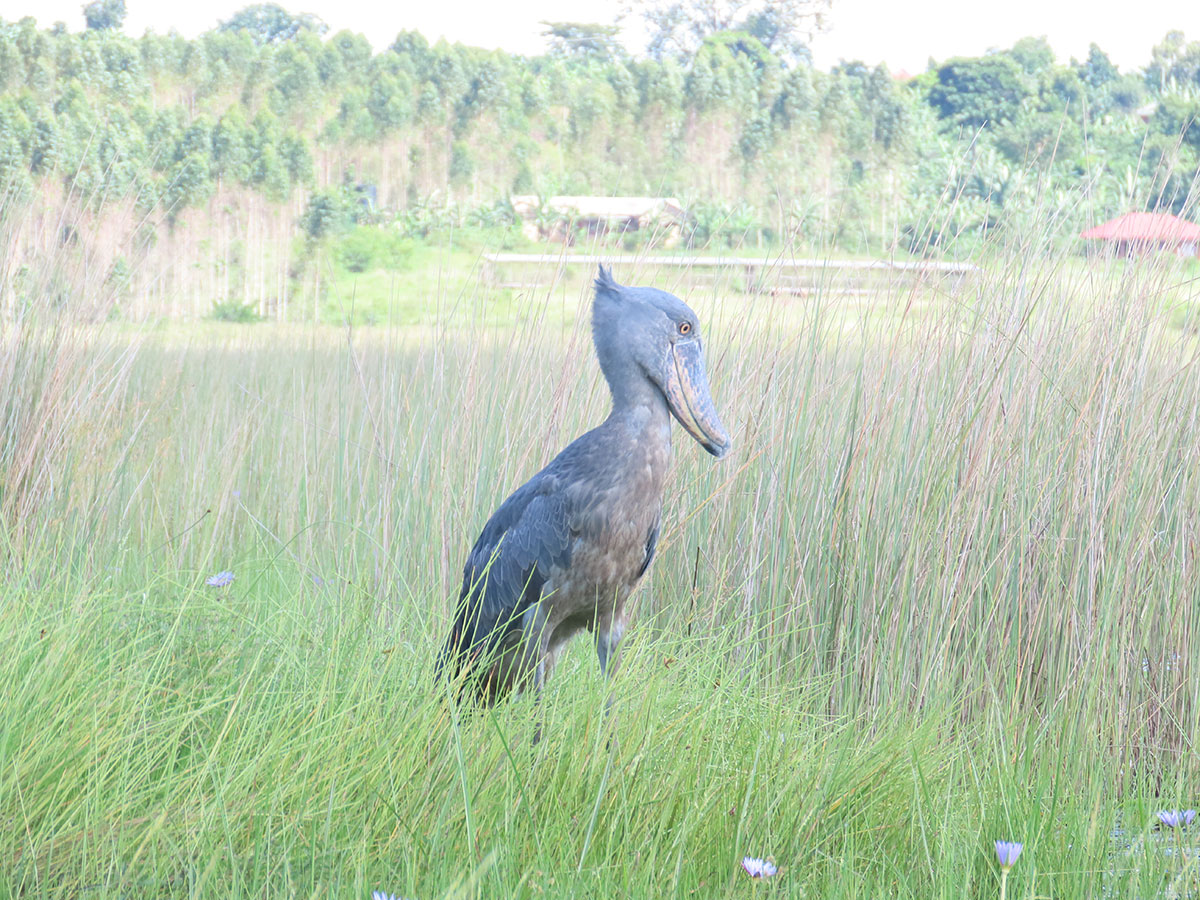
Birders will search for a remarkable diversity of species, including Uganda-Rwanda endemics, East African near-endemics, and rare regional specialties. The tour blends intensive forest birding and with classic safari landscapes, offering excellent opportunities to observe unique species such as the African Green Broadbill, African Green-breasted Pitta, Shoebill and more
3 Weeks Uganda & Rwanda Endemics Birding: Detailed Itinerary.
Duration: 21 Days / 20 Nights, Style: Private Birding Safari, Ideal For: Serious Birdwatchers, Ornithologists, Nature Wildlife Photographers, Start/End: Entebbe/Kigali , Accommodation: Comfortable lodges, birding camps, and nature guesthouses, Transport: Private 4×4 safari vehicle with an accomplished birding guide
Day 1: Entebbe to Mabamba Swamp & Mabira Forest
Your birding journey begins at the crack of dawn as we pick you up from Entebbe. We transfer straight to Mabamba Swamp, a RAMSAR site and premier wetland home to the prehistoric Shoebill. Navigating the narrow channels via motorized wooden canoe, we actively target the majestic Shoebill alongside key wetland specials: The Lesser Jacana, Blue-breasted Bee-eater, Papyrus Gonolek, African Pygmy-Goose, Weyns’s Weaver, White-backed Night-Heron, Malachite Kingfisher, Long-toed Lapwing, Purple Swamphen, and Northern Brown-throated Weaver. Mammals are specialized here; you stand an excellent chance of spotting the elusive, marsh-dwelling Sitatunga antelope is rare here. Spot-necked Otters can often be seen playing in the open water.
After a rewarding morning, we embark on a 3-hour eastward drive (approximately 90 km depending on Kampala traffic) to the lush eco-zone of Mabira Forest. You will check into your jungle oasis, The Rainforest Geo Lodge, for a relaxing evening embedded in nature.
Day 2: Birding in Mabira Forest
Spend a full day exploring the extensive trail systems of Mabira Forest, one of Uganda’s largest surviving semi-deciduous rainforests. This habitat acts as an island of biodiversity where we track unique West African forest species. Your checklist today features: The Nahan’s Partridge, Cassin’s Hawk-Eagle, Purple-throated Cuckoo-shrike, Jameson’s Wattle-eye, Forest Wood-hoopoe, Tit Hylia, Yellow-crested Woodpecker, Blue-throated Roller, African Shrike-flycatcher, and the stunning Great Blue Turaco. Primates rule the canopy here; look forward to crisp sightings of the Ugandan Grey-cheeked Mangabey (a localized specialty), alongside Red-tailed Monkeys and Black-and-white Colobus.
After dusk, (optional) we transition into an exhilarating night walking safari using high-powered spotlights to look for nocturnal mammals. We actively seek out the bizarre Lord Derby’s Anomalure (scaly-tailed flying squirrel – very rare), Thomas’s Galago, Demidoff’s Dwarf Galago, and various Potto species moving silently through the high branches.

Day 3: Mabira Forest to Kapchorwa Town
We head back into the forest trails for a final morning session to pick up any canopy or understory species missed the day before, keeping an eye out for dynamic mixed-species feeding flocks. After an early lunch, we pack up and begin our scenic afternoon transfer to Kapchorwa town, tucked high on the slopes of Mount Elgon. This journey covers roughly 220 km and takes about 4.5 to 5 hours, driving past extensive sugarcane plantations, crossing the River Nile at Jinja, and winding upwards into the crisp, high-altitude air of the Eastern highlands.
Upon arrival, you will settle in and unpack at the community-rooted Home of Friends Guesthouse, a lovely hilltop retreat known for its warm hospitality and stunning panoramic views of the surrounding ridges. Take the evening to relax, enjoy garden-to-table dining, and acclimate to the cooler mountain temperatures.
Day 4: High Altitude Birding at Kapkwai Exploration Centre
Today is dedicated to exploring the montane forest ecosystems at the Kapkwai Exploration Centre within Mount Elgon National Park. The higher elevations host completely different avifauna from the lowlands. We will explore the forest and the edges to target highly localized montane specials: The Hartlaub’s Turaco, Tacazze Sunbird, Eastern Bronze-naped Pigeon, Mountain Yellow Warbler, Black-collared Apalis, White-starred Robin, Black-and-white-casqued Hornbill, Moustached Tinkerbird etc.
Mammal watching in these mountain forests yields unique residents. Watch the high canopies for the striking Mount Elgon Guereza Colobus monkey. Terrestrial tracks and clearings might reveal the Bushbuck or the small, secretive Harvey’s Duiker moving softly through the undergrowth. After an intensive day on the mountain trails, we return to the cozy comforts and a warm campfire at your guesthouse.

Day 5: Kapchorwa to Masindi via Nyabyeya Grassland
We start an early, long travel day toward the historic birding hub of Masindi. The travel time takes roughly 7 to 8 hours (about 420 km), shifting from the eastern highlands across the flat, factual terrain of central Uganda down into the Albertine Rift region. Road conditions dictate our precise pace, but our ultimate goal is an early arrival to maximize afternoon birding at the unique Nyabyeya Grassland.
This open habitat allows us to pick up distinct woodland and savannah species, including the Lesser Blue-eared Starling, Cabanis’s Bunting, Compact Weaver, Brown-backed Scrub-Robin, Flappet Lark, Moustached Grass-Warbler, Marsh Tchagra, Croaking Cisticola, Broad-tailed Warbler, and the Double-toothed Barbet. In the adjacent scrub, we may spot Olive Baboons and Savanna Baboons. You will spend the night at the legendary Masindi Hotel, Uganda’s oldest operating hotel, where historical charm meets modern comfort.
Day 6: The Famous "Royal Mile" of Budongo Forest
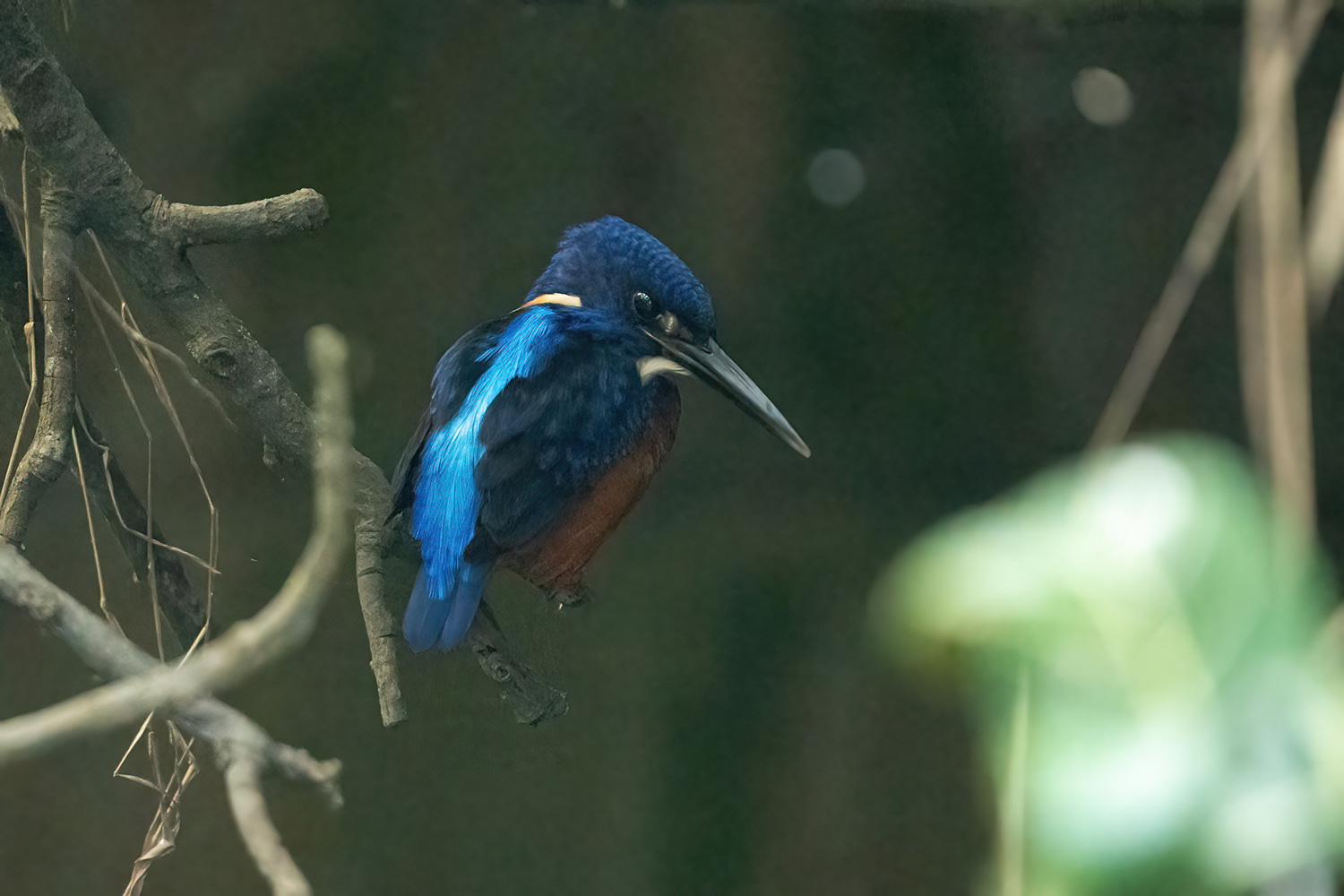
Today offers world-class birding as we enter the “Royal Mile” in Budongo Forest, widely considered one of the finest forest birding tracks in the entire African continent. Accompanied by an expert local site guide, we walk this flat, wide avenue beneath an ancient mahogany canopy. We are searching for 10 exceptional West African forest and Albertine Rift specials: The Chocolate-backed Kingfisher, African Dwarf Kingfisher, Blue-breasted Kingfisher, White-thighed Hornbill, Yellow-footed Flycatcher, Ituri Batis, Rufous-crowned Eremomela, Ugandocichla (Spotted Greenbul), Fire-crested Alethe, and Blue-throated Brown Sunbird. Budongo’s canopy is rich with mammals.
It is a vital stronghold for the Central African Chimpanzee, and while walking, we often hear their wild pant-hoots echoing through the trees. We will also closely observe the smart-looking Blue Monkey and the agile Red-tailed Monkey feeding on seasonal wild figs.
Day 7: Masindi to Semuliki Valley National Park
We check out early for our journey southwestward to the unique biogeographical zone of Semuliki Valley National Park. The travel time is approximately 6 hours along the scenic rift valley escarpment road, covering roughly 290 km. Semuliki represents the easternmost extension of the vast, pristine Congo Basin rainforest, meaning we will encounter species found nowhere else in East Africa.
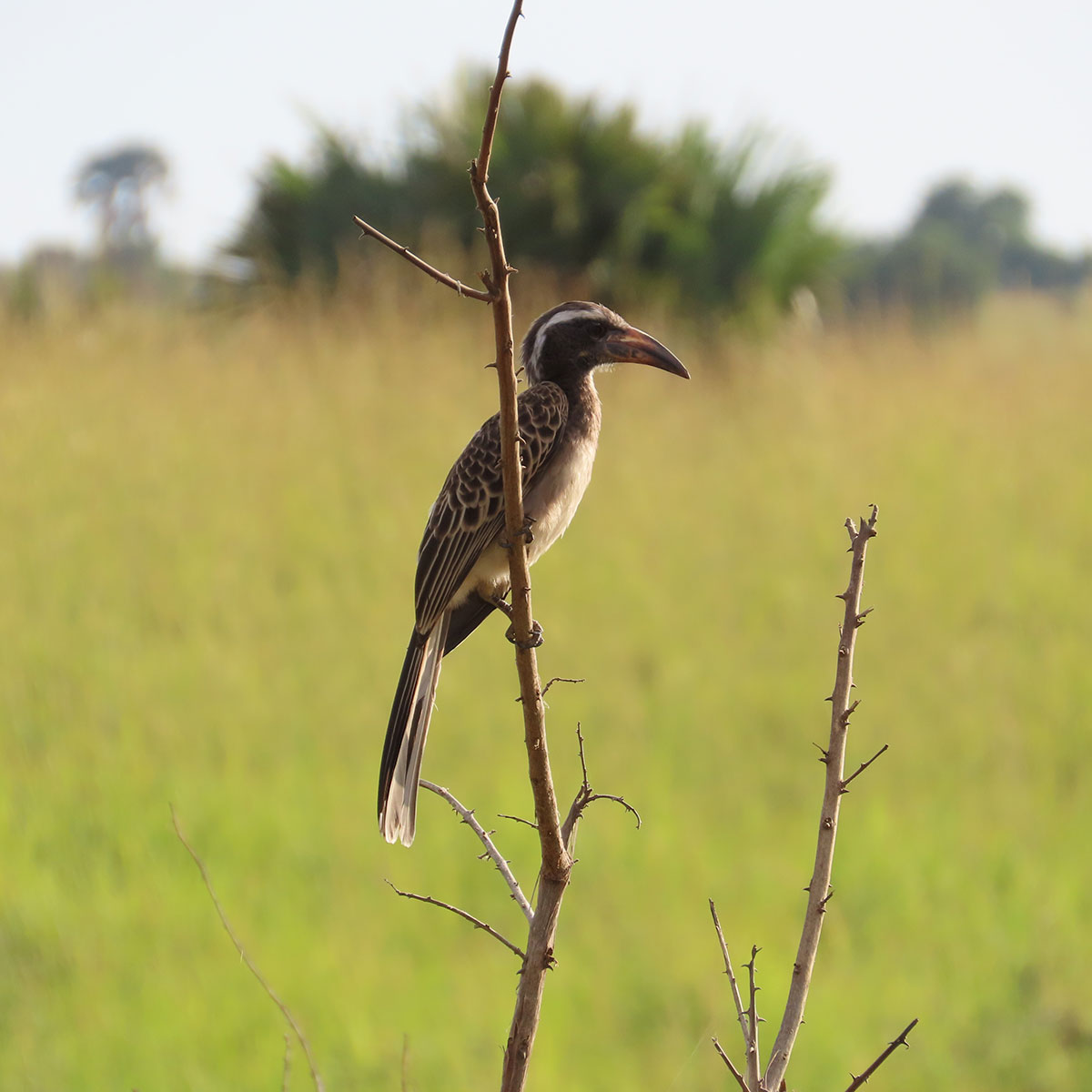
As we approach, we engage in highly productive afternoon roadside birding along the park boundaries, targeting edge-dwelling species such as the Piping Hornbill, Swamp Palm Bulbul, Yellow-throated Nicator, Black-winged Oriole, African Piculet, Orange-cheeked Waxbill, Blue-billed Malimbe, Grant’s Bluebill, Vieillot’s Black Weaver, and Red-billed Dwarf Hornbill. Depending on current park conditions, we will accommodate you either at the park’s local bandas or within the nearby Bundibugyo town center.
Day 8: Deep Forest Birding in Semuliki National Park
A spectacular full day of deep forest immersion along the famous Kirumia Trail of Semuliki Forest. The dense undergrowth and towering canopies require patience but reward us with incredible Guinea-Congo biome highlights. We will seek out iconic forest targets: The Nkulengu Rail, Lyre-tailed Honeyguide, Yellow-throated Cuckoo, White-crested Hornbill, Red-billed Helmetshrike, Xavier’s Greenbul, Capuchin Babbler, Crested Malimbe, Red-thighed Sparrowhawk, and the elusive Long-tailed Hawk.
Primate diversity spikes dramatically in this Central African ecosystem. Keep your binoculars ready for the rare Central African Red Colobus, the Dent’s Mona Monkey, and the spectacular De Brazza’s Monkey with its distinct white beard. For terrestrial mammals, we keep a sharp lookout for tracks or direct sightings of the diminutive Peter’s Duiker or the beautifully striped Bush-pig moving through the damp leaf litter but rarely spotted.
Day 9: Second Day of Exploration in Semuliki
We return to Semuliki’s rich trail systems and forest wetlands to target any localized specialties that eluded us on day eight. Today’s tracking focuses heavily on specialized forest hornbills and skulking understory insectivores. Our core avian targets include the Black Dwarf Hornbill, Black-casqued Hornbill, Red-rumped Tinkerbird, Yellow-longbill, Leaf-love, Fire-crested Alethe, Lowland Akalat, Green-tailed Bristlebill, Pale-fronted Negrofinch, and the secretive Spot-breasted Ibis – Very rare.
Mammal encounters remain fascinatingly diverse here. In the denser thickets, we might spot the nimble Alexander’s Bush Squirrel or the Red-legged Sun Squirrel. If we explore near the famous Sempaya Hot Springs, we stand a good chance of observing playful troops of Olive Baboons and Vervet Monkeys hanging around the geothermal vents, alongside the occasional shy Forest Buffalo wallowing in the mineral-rich mud clearings.
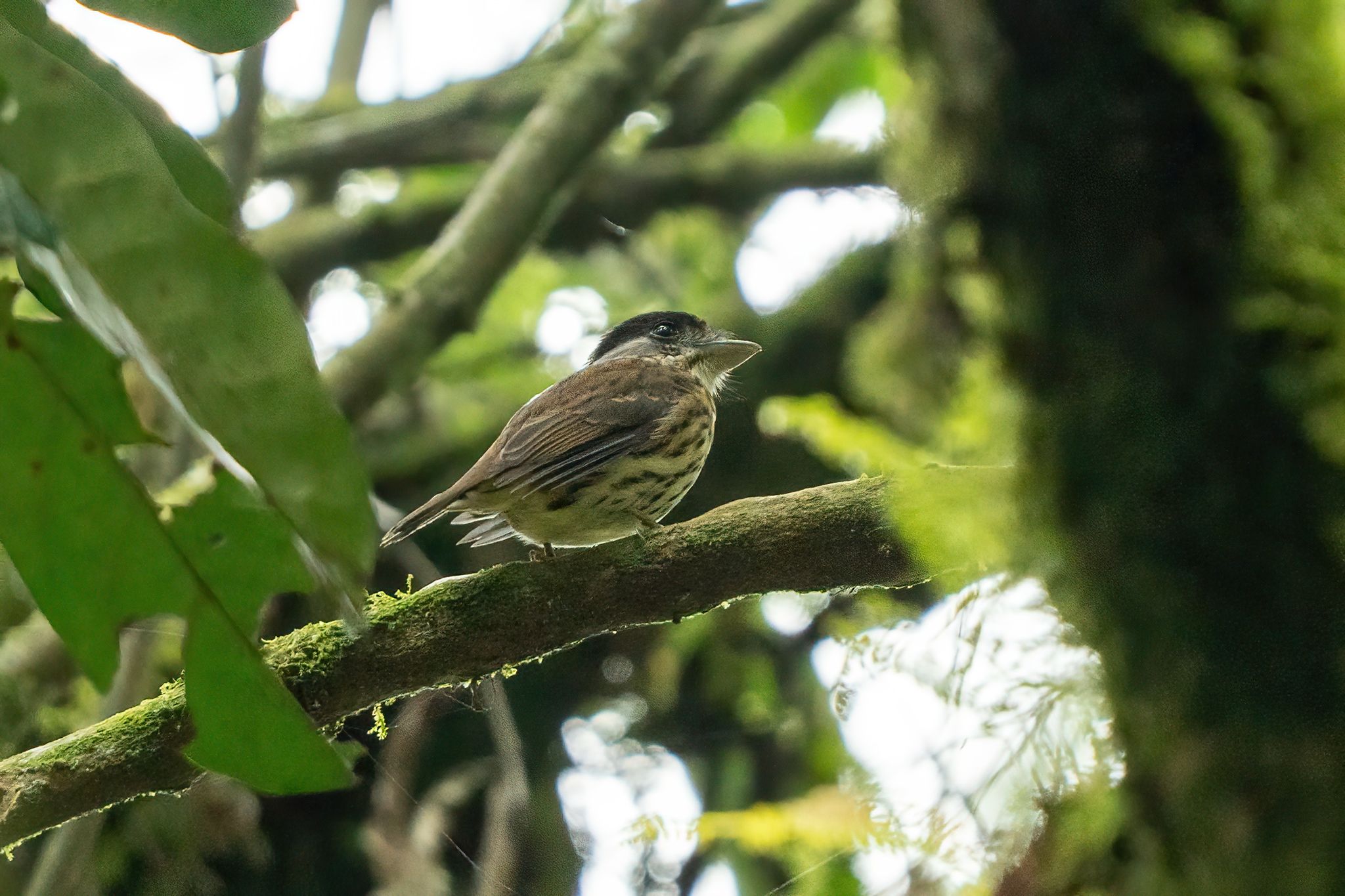
Day 10: Semuliki to Kibale Forest National Park
We bid farewell to Semuliki and undertake a 2 to 3-hour drive (around 80 km) up into the rolling, emerald-green tea estates surrounding Fort Portal and Kibale Forest National Park. In the afternoon, you can choose between an optoinal exciting chimpanzee tracking excursion or a scenic nature walk through the community-managed Bigodi Wetland Sanctuary. The swamp boardwalk yields incredible birding, where we regularly spot the Great Blue Turaco, White-spotted Flufftail, Hairy-breasted Barbet, Joyful Greenbul, Western Nicator, Bocage’s Bush-shrike, Brown-throated Wattle-eye, Superb Sunbird, Yellow-billed Barbet, and Papyrus Gonolek. Bigodi is famous as a “primate capital,” hosting up to eight species in a single afternoon, including the Uganda Red Colobus, L’Hoest’s Monkey, and the Black-and-white Colobus. You will overnight right on the forest edge at the comfortable Kibale Forest Camp, enjoying a stunning forest canopy backdrop.

Day 11: Green-breasted Pitta Quest to Lake Mburo
Our morning begins before dawn as we walk deep into Kibale’s damp forest floor to witness the iconic, magical display of the rare Green-breasted Pitta. Once the sun rises, we expand our search to other forest floor and canopy specials: The Black-eared Ground-Thrush – rare, Abyssinian Ground-Thrush – rare, Crowned Eagle, Afep Pigeon, Dusky Crimsonwing, Yellow-spotted Barbet, Purple-headed Starling, Black-capped Apalis, and Blue-throated Roller. Beyond birding, Kibale holds the highest density of primates in Africa; expect close views of Chimpanzees and L’Hoest’s Monkeys.
After lunch, we embark on a 4.5-hour southern drive (around 240 km) to the dry acacia woodlands of Lake Mburo National Park. We cross the equator and arrive before sunset at the lovely, owner-operated Hyena Hill Lodge, perfectly perched on a rocky hill with sweeping views of the park.
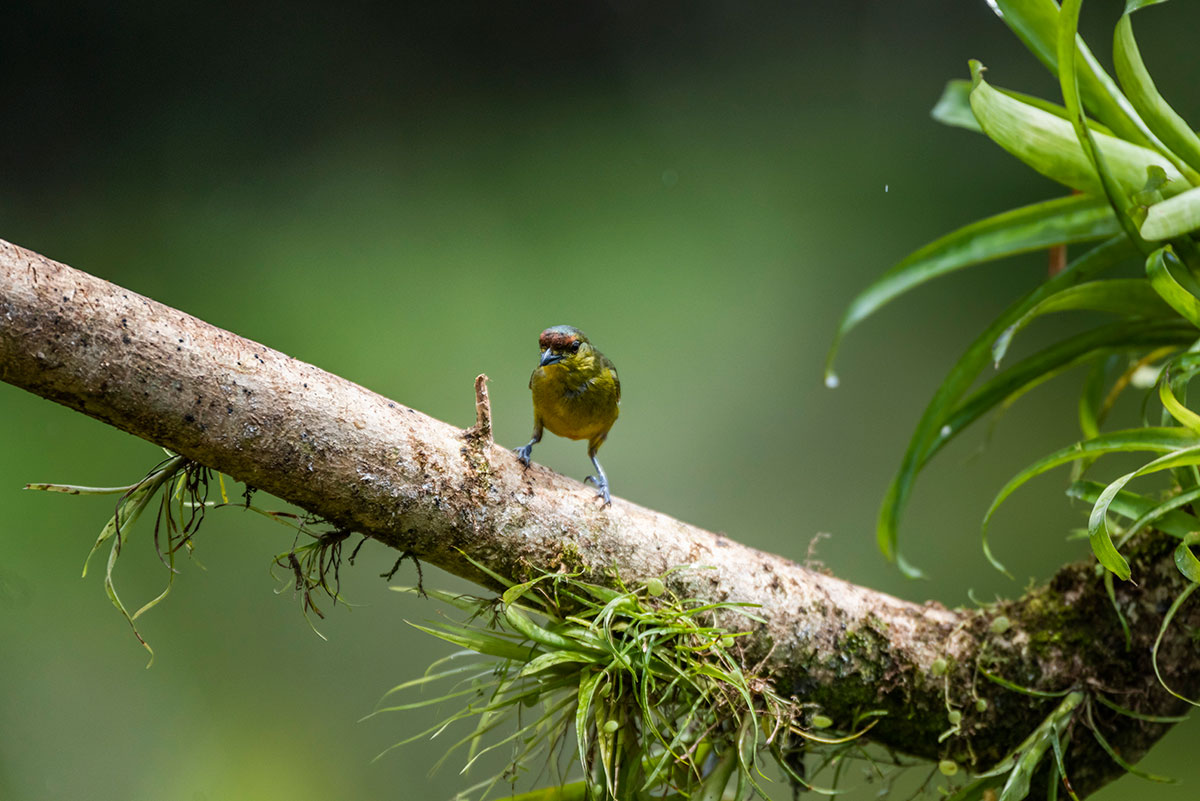
Day 12: Savannah Birding & Boat Cruise at Lake Mburo
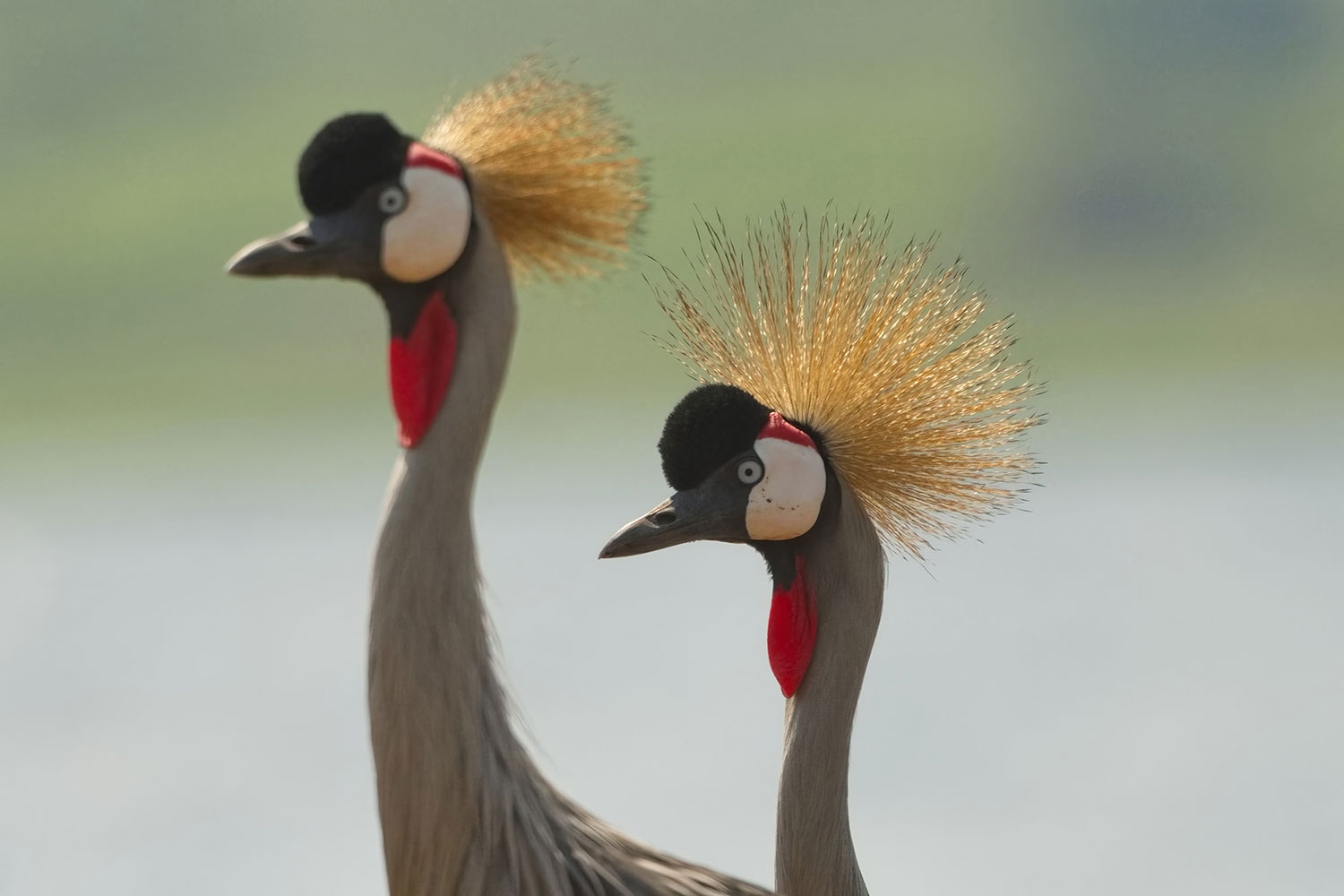
Enjoy a classic savannah morning game drive through Lake Mburo’s rich acacia woodlands. This park offers a massive contrast to the wet forests, allowing us to find specialized dry-country birds: The Red-faced Barbet, Tabora Cisticola, Coqui Francolin, Green-capped Eremomela, Woodpecker, Spot-flanked Barbet, Rufous-bellied Heron, White-winged Swamp Warbler, African Finfoot, and the majestic Crested Crane.
Lake Mburo is the premier location to view large herds of plains game; you will easily spot the graceful Impala (found nowhere else in Uganda), Burchell’s Zebra, Defassa Waterbuck, Topi, Bushbuck, and the massive Cape Buffalo. In the afternoon, we take a relaxing boat cruise on the lake to closely observe Hippos, giant Nile Crocodiles, and the specialized African Finfoot swimming quietly along the red mangrove roots.
Day 13: Lake Mburo to Queen Elizabeth National Park
We head out of the park gates and embark on a 4-hour drive (about 180 km) westward to Queen Elizabeth National Park, cruising down the spectacular Kichwamba Escarpment into the floor of the Albertine Rift Valley. In the afternoon, we launch a world-class boat safari along the famous Kazinga Channel, a natural waterway connecting Lake Edward and Lake George. The bird concentrations on these banks are jaw-dropping. We will target spectacular waterbirds: the African Skimmer, Pink-backed Pelican, Saddle-billed Stork, Gull-billed Tern, Yellow-billed Stork, Kittlitz’s Plover, African Fish Eagle, Water Thick-knee, Squacco Heron, and Glossy Ibis.
The shores are packed with large mammals; you will sail safely past hundreds of wallowing Hippos, Elephant herds spraying water, Cape Buffaloes, and elegant Uganda Kobs drinking at the water’s edge. Your accommodation tonight is the cozy, wilderness-facing Engiri Game Lodge.
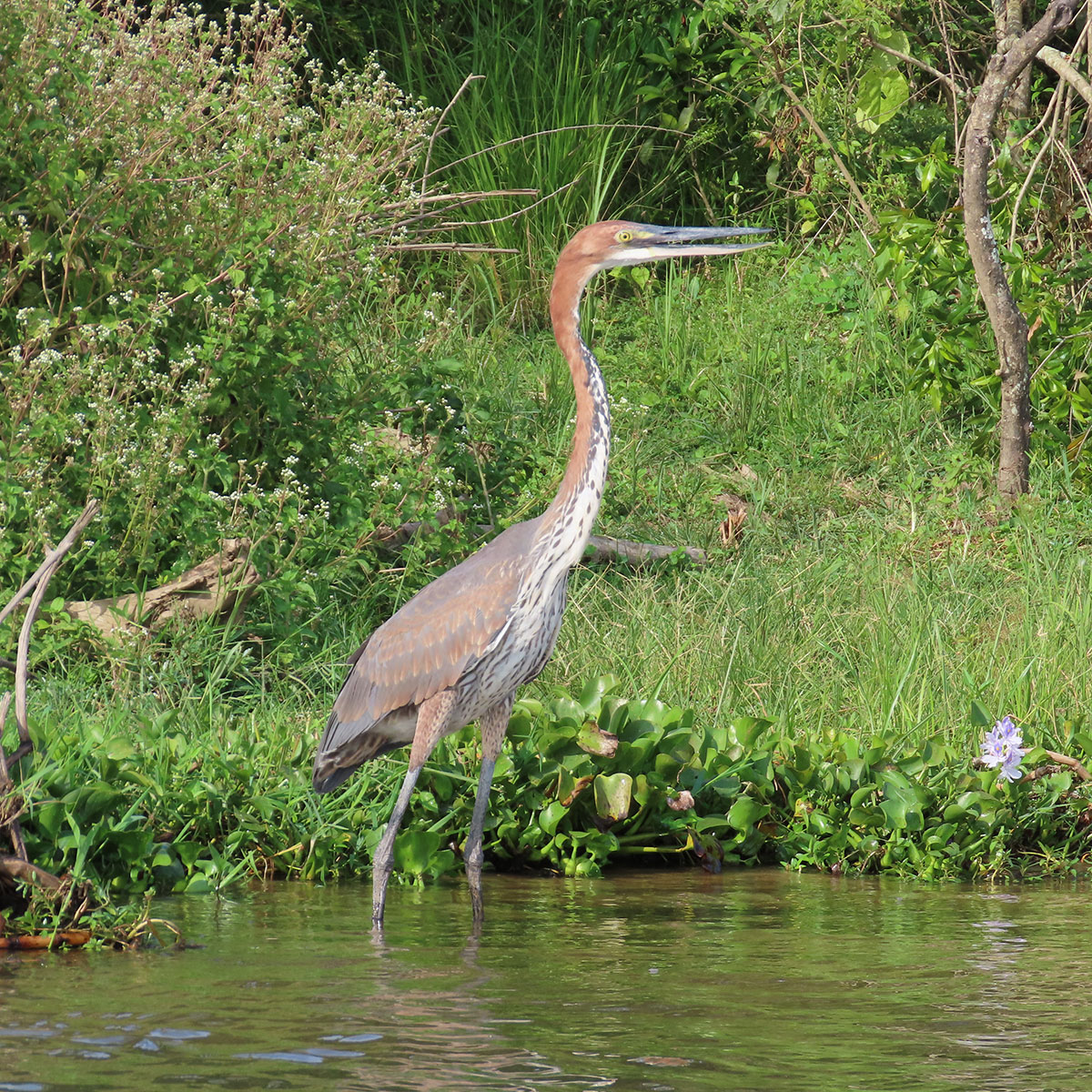
Day 14: Ishasha Sector to Bwindi (Buhoma Sector)
We travel south through the remote Ishasha Sector of Queen Elizabeth National Park, famous worldwide for its unique population of tree-climbing lions. As we scan the giant fig trees, we enjoy fantastic woodland birding, targeting the Blue-breasted Kingfisher, White-headed Barbet, Stout Cisticola, Greater Honeyguide, Broad-billed Roller, Little Bee-eater, Sulphur-breasted Bush-shrike, Yellow-fronted Tinkerbird, Black-bellied Bustard, and Martial Eagle. Mammal highlights here include the tree-climbing Lions resting on branches, large herds of Topi, Elephants, and the diurnal Banded Mongoose.
From Ishasha, we ascend into the rugged, winding terraced hills of the Kigezi highlands, reaching the ancient rainforest of Bwindi Impenetrable National Park (Buhoma Sector) after a total 5-hour journey. We will check in at the wonderful community lodge, Ride 4 a Woman Lodge.
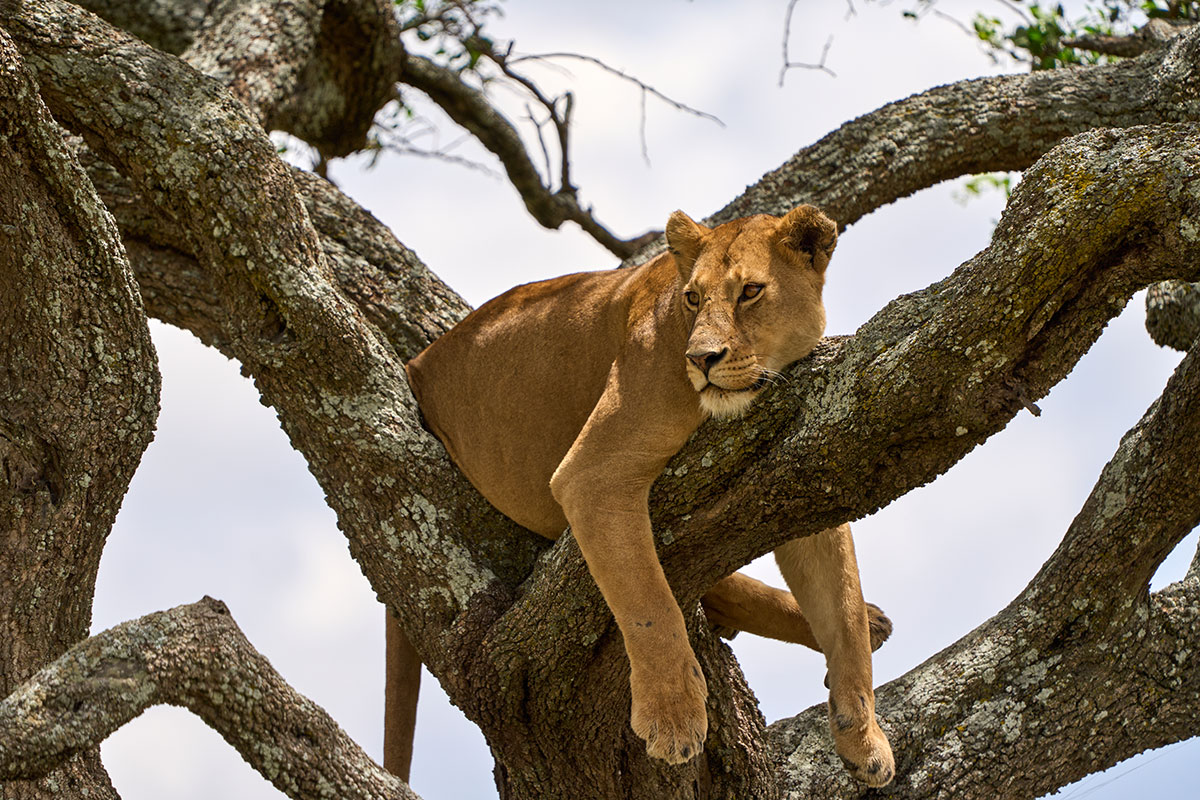
Day 15: Gorilla Tracking or Forest Birding in Buhoma
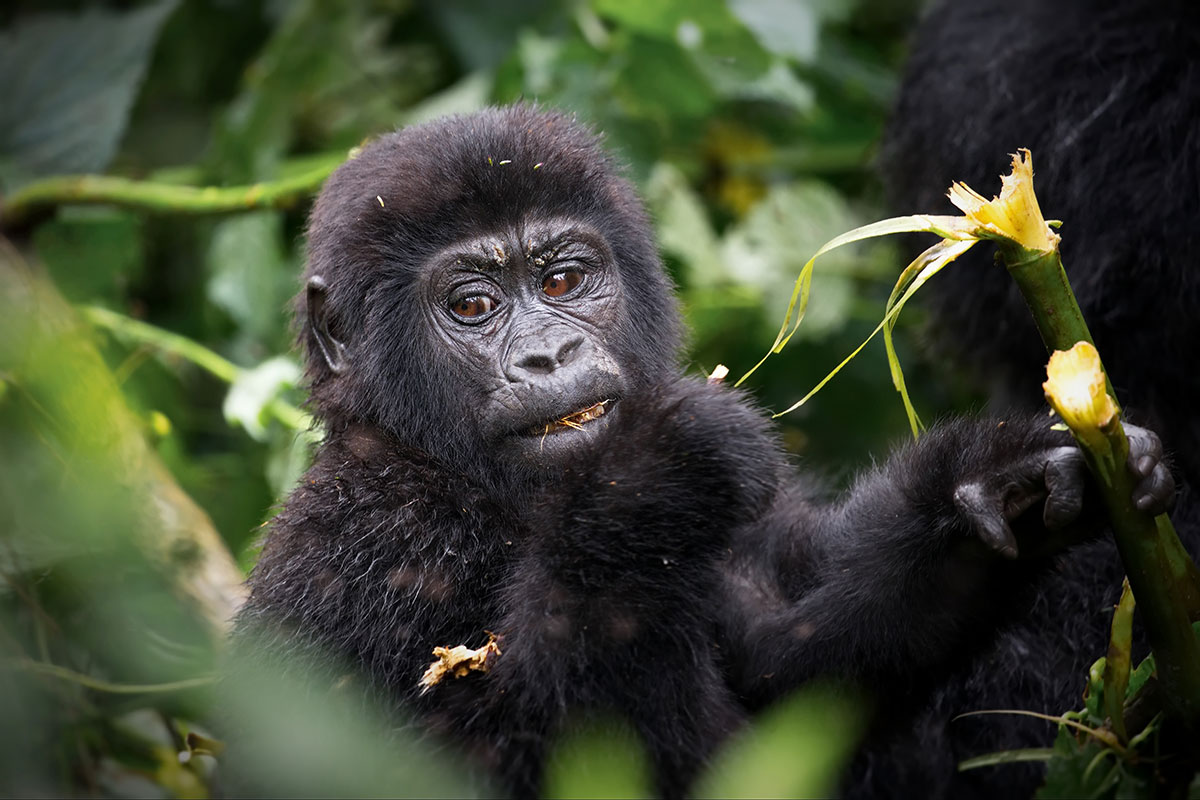
Today offers a highly flexible itinerary: you can choose to trek the world-famous Mountain Gorillas or spend a full day birding the pristine mountain trails of Buhoma. Bwindi is a premier UNESCO World Heritage site hosting dozens of Albertine Rift endemics. Our specialized avian targets today include the rare Short-tailed Warbler, Kivu Ground-Thrush, Bar-tailed Trogon, Many-colored Bush-shrike, Ansorge’s Greenbul, White-bellied Robin-Chat, Equatorial Akalat, Neumann’s Warbler, Pale-breasted Illadopsis, and Lühder’s Bush-shrike.
The forest trails also offer regular encounters with the handsome L’Hoest’s Monkey, the energetic b and the small, forest-dwelling Black-fronted Duiker. We return to the lodge to celebrate our sightings over dinner.
Day 16: Buhoma through "The Neck" to Ruhija Sector
We start our morning birding the lush forest edges of Buhoma before undertaking a highly productive transfer up to the higher-altitude Ruhija Sector of Bwindi. The drive winds through an area known as “The Neck,” an important riverine forest corridor connecting the low and high sections of the park. Total travel time is about 3 hours over rough mountain roads.
We will make regular stops to pick up unique altitudinal migrants and endemics: The Black Bee-eater, Chapin’s Flycatcher, Cassin’s Flycatcher, Mountain Wagtail, Pink-footed Puffback, Willcocks’s Honeyguide, Toro Olive Greenbul, Strange Weaver, Dusky Twinspot, and Western Bronze-naped Pigeon. The change in altitude introduces new mammals; we keep our eyes peeled for the beautiful, golden-furred L’Hoest’s Monkey and the unique, thick-furred Carruther’s Mountain Squirrel. We check in for two nights at the scenic Bakiga Lodge.
Day 17: The Epic Mubwindi Swamp Trail in Ruhija
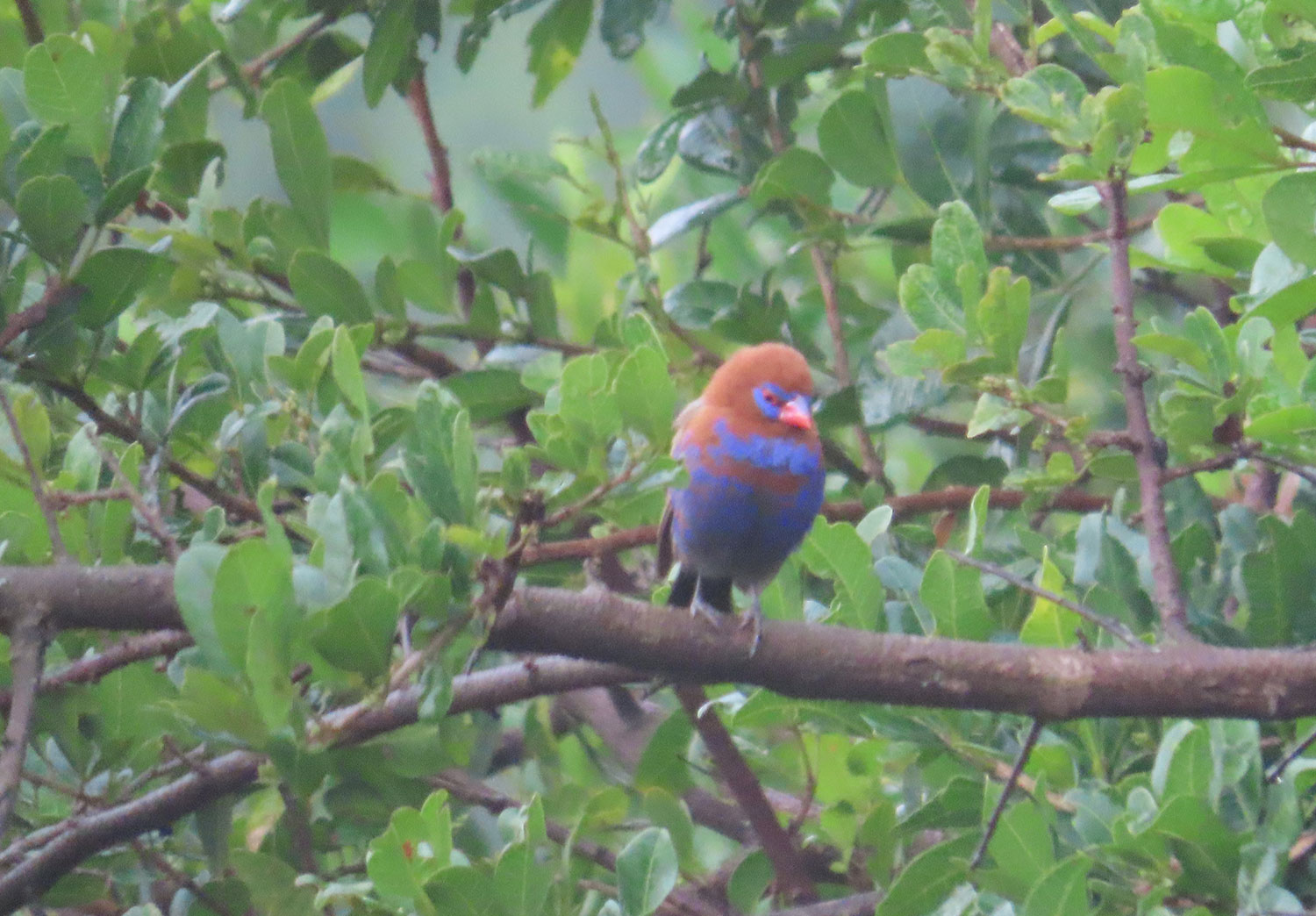
Today we undertake a rewarding, high-altitude hike down the famous Mubwindi Swamp Trail, the absolute holy grail for birders visiting Uganda. This pristine trail is the top location to find the critically endangered Albertine Rift endemics. We focus our efforts on highly prized targets: the African Green Broadbill, Grauer’s Rush Warbler, Regal Sunbird, Archer’s Robin-Chat, Dwarf Honeyguide, Stripe-breasted Tit, Purple-breasted Sunbird, Blue-headed Sunbird, Yellow-eyed Black Flycatcher, and Mountain Masked Apalis. The high-altitude mist forests are a tranquil environment, home to unique, adapted mammals. We occasionally spot the rare, high-altitude Golden Monkey moving through the bamboo zones, along with the standard troops of Mountain Guereza Colobus, the shy Bushbuck, and the vocal but hidden side-striped jackals along the forest fringes.
Day 18: Bwindi to Nyungwe National Park (Rwanda)
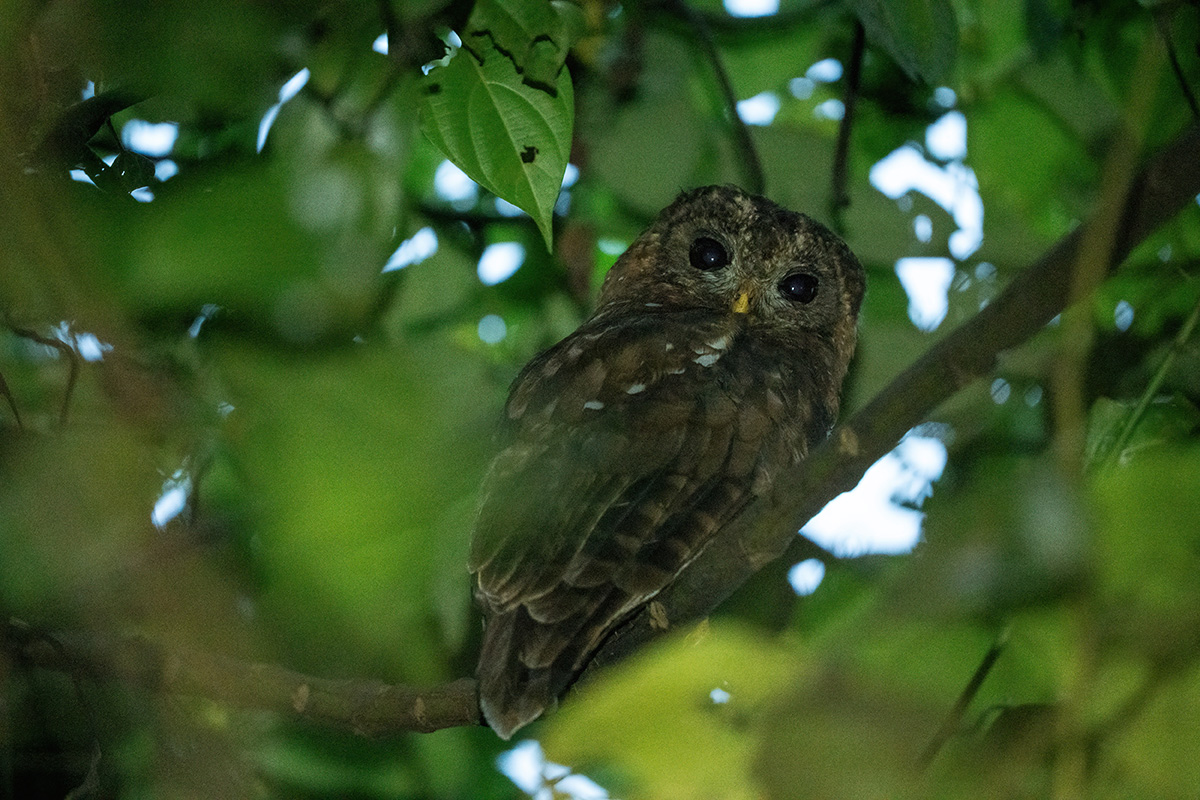
We pack up early for a long, international travel day crossing the border into Rwanda, heading directly for Nyungwe National Park. The journey takes roughly 7 to 8 hours (about 260 km) over dramatic winding switchbacks, climbing high into the rolling hills of Rwanda. Border crossings at Cyanika or Gatuna can take up to an hour, so we plan our stops carefully. Nyungwe is one of the oldest and largest preserved montane rainforests in Central Africa, protecting an incredible array of Albertine Rift biodiversity. Along the entrance roads, we can spot our first Rwandan montane birds, like the Rwenzori Turaco and the Handsome Francolin. Upon arrival, you will check into the comfortable, serene Munazi Lodge (alternatively spelled Munazi Eco-Lodge) located on the edge of the forest, where you can unwind after a long day of travel.
Day 19: Deep Montane Birding in Nyungwe Forest
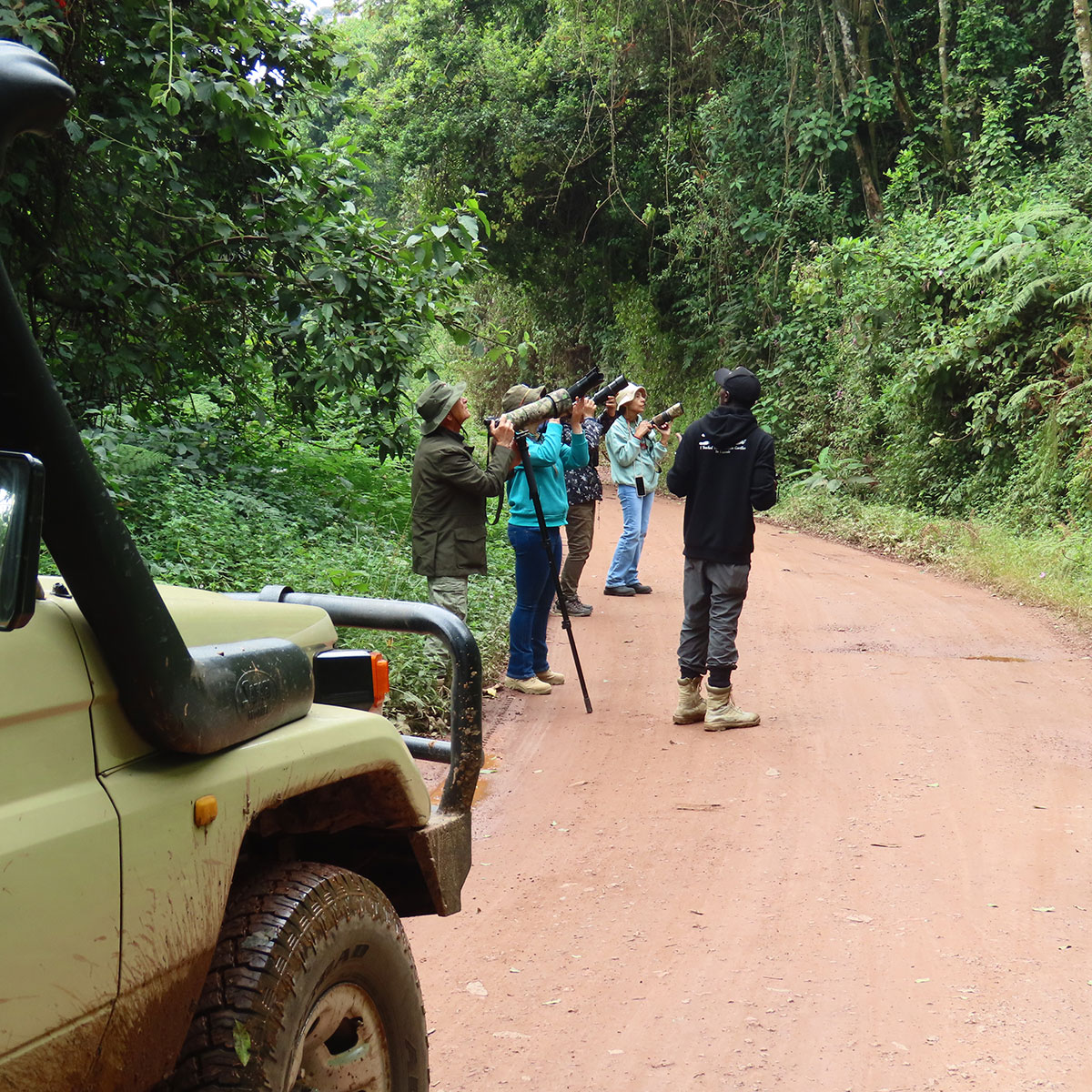
Spend a full day exploring the high-altitude trails of Nyungwe Forest, focusing on the specialized understory and canopy flocks. Nyungwe is incredibly scenic, with deep valleys and dense mossy forests. We will target magnificent Albertine Rift endemics and montane specials: The Rwenzori Turaco, Handsome Francolin, Red-collared Mountain-Babbler, Kungwe Apalis, Albertine Owlet, Rwenzori Apalis, Rwenzori Batis, Stripe-breasted Tit, Blue-headed Sunbird, and the Mountain Sooty Boubou.
Nyungwe is globally celebrated for its immense primate herds; you will look in awe at massive, semi-habituated troops of Rwenzori Black-and-white Colobus (sometimes numbering over 400 individuals in a single troop!), alongside the localized L’Hoest’s Monkey. After a hearty dinner, we head out for a night walk to spot the nocturnal Lord Derby’s Flying Squirrel and specialized forest bushbabies.

Day 20: Canopy Walks & Missing Targets in Nyungwe
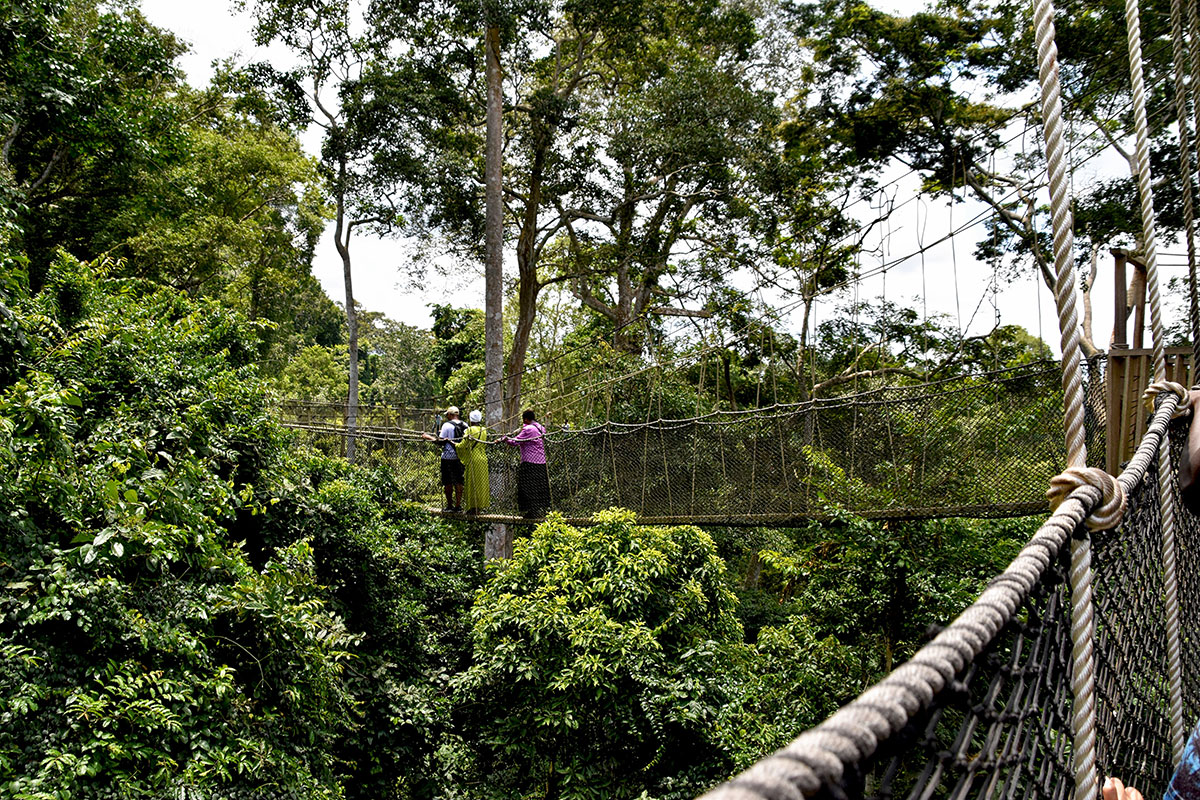
We dedicate our second full day in Nyungwe to exploring different altitudinal trails and taking an exciting walk across the park’s famous Canopy Walkway—a suspension bridge hanging 70 meters above the deep forest floor. This gives us eye-level views of elusive canopy birds: the Great Blue Turaco, Ruwenzori Nightjar, Doherty’s Bush-shrike, Bar-tailed Trogon, Mountain Oriole, White-tailed Blue Flycatcher, Sharpe’s Starling, Stuhlmann’s Double-collared Sunbird, Strange Weaver, and the Red-faced Woodland-Warbler.
Mammal watching from the canopy suspension bridge offers a unique vantage point; we regularly look down onto the crowns of trees to see playful troops of Silver Monkeys, Red-tailed Monkeys, and the occasional Sun Squirrel darting along branches. We return to our lodge for a final evening of relaxation in the clean mountain air.
Day 21: Nyungwe to Kigali via Nyandungu Eco Park
We leave the mountains behind and take a 5-hour drive (about 220 km) across Rwanda’s scenic countryside to the capital city of Kigali. In the afternoon, we visit the beautifully restored Nyandungu Eco-Tourism Park, a premier urban wetland sanctuary right in the heart of the city. This provides an excellent final birding session to round out our trip list, targeting urban wetland and woodland specialists: the Grey-Crowned Crane, Black-headed Heron, African Spoonbill, Spur-winged Goose, Yellow-billed Duck, Hottentot Teal, African Jacana, White-Collard Oliveback Winding Cisticola, Bronze Sunbird, and the Grosbeak Weaver. While large mammals are absent from this urban park, you can spot the lively Vervet Monkeys playing in the acacia groves. After a memorable final afternoon walk, we transfer you directly to Kigali International Airport for your evening departure flights home.